Emergency Response

How to Run a Fire Evacuation Drill for a Small UK Business: Step-by-Step
Most fire drills fail quietly. The alarm sounds, everyone files out, someone says "that went well", and the logbook gets a tick. Nobody times it. Nobody checks whether the back stairs were usable. Nobody asks the new starter whether she knew where to go. The drill did its job on paper — and nothing at all for the morning a real alarm goes off.
A useful drill takes about twenty minutes and tells you more about your emergency plan than any document. Here's how to run one properly in a small UK business, whether you're a twelve-person studio above a shop or a café with a kitchen full of hot oil.
Decide what you're actually testing
Before you pick a date, write down two or three things you want to find out. A drill with no questions attached is just a queue in a car park.
Useful things to test:
- Can everyone hear the alarm — including the stockroom, the loos and anyone wearing ear defenders?
- How long from the alarm sounding to the last person standing at the assembly point?
- Do the fire doors actually close behind people, or does someone wedge them with a chair on the way past?
- Does the roll call account for visitors, contractors and agency staff, not just the people you see every day?
- Do your fire wardens sweep the areas they've been assigned?
Then vary the conditions. A drill at 9:05am on a Tuesday tests one thing. A drill at 12:40pm, with a delivery driver at the back door and two people on client calls, tests something much closer to real life.
Brief your wardens, not the whole building
If this is your first drill in the premises, brief everyone in advance — no one should be discovering the exits for the first time while the alarm is ringing. Once people know the basics, keep the date quiet so you're testing reaction rather than rehearsal.
Your fire wardens should know before anyone else. Give them five minutes and cover:
- Which rooms and corridors they're responsible for sweeping, and in what order. Toilets, meeting rooms and the kitchen at the back are the usual misses.
- The primary route out and the fallback if that one is blocked.
- Where the assembly point is — far enough from the building to be clear of falling glass and out of the way of fire engines arriving.
- Who carries the visitor book and the staff list. This should be a named person, with a named deputy for days they're off.
- What to say to someone who won't leave. Firm, calm, no debate: "You need to come with me now."
Tell them one more thing: this is not a race, and no one gets told off for being last out.
Run it like the real thing
Use the actual alarm, not a shout across the office. Time it from the moment the sound starts, and note the time the last person reaches the assembly point — and the time the roll call is complete, which is usually the slower of the two.
To add realism without creating risk, brief a warden to stand at the main entrance and redirect people to the secondary route. Always keep a safe way out available; never physically block an exit or stack furniture against it, even for a test.
Things worth doing differently
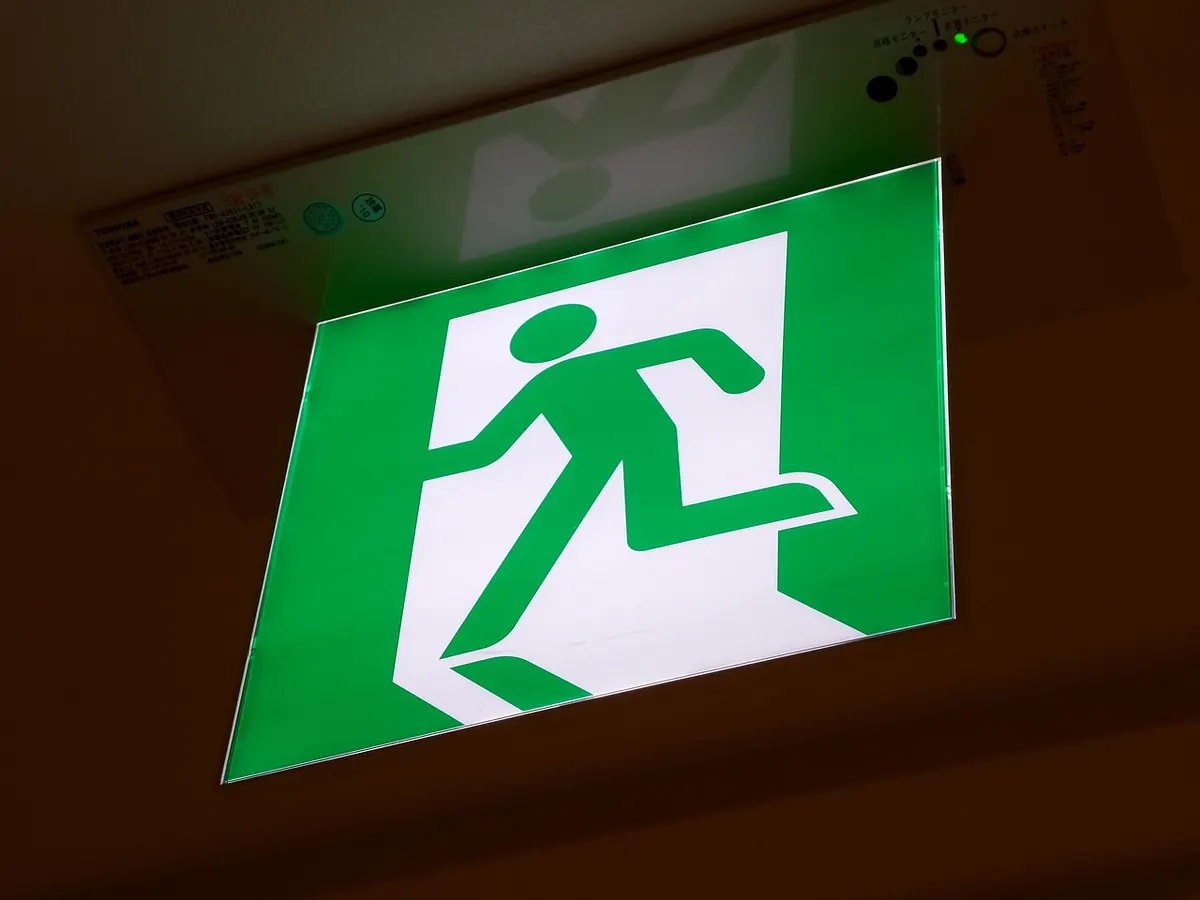
Swap the observer each time so it isn't always the office manager noticing what went wrong. Ask a warden to keep their phone out and photograph anything that impeded the evacuation — a trolley in a corridor, an exit sign that's gone dim, a door that needs two hands and a shoulder. And if you have more than one site or floor, stagger the drills so you learn something new from each.
How often? Most guidance points to at least one drill a year, and many small businesses run two so that new starters get a proper practice. Check what your fire risk assessment says and what your local fire and rescue service recommends for premises like yours.
Make the roll call mean something
A show of hands is not a roll call. One person, standing at the assembly point with a printed list and a pen, ticks names off. Everyone stays at the assembly point until they're released — people drifting back to their desks mid-count is how someone gets reported missing when they're fine, or missed when they aren't.
Your list needs to cover more than employees: visitors, contractors, cleaners, agency staff and, if you have a shop front, customers. If you don't have a signing-in system, start one. A clipboard by the door beats memory every time.
If someone is unaccounted for, report it to the person in charge immediately. Nobody goes back inside to look for them. That's a decision for the fire and rescue service, who know what they're walking into.
PEEP checks: test the plan, not the paperwork
A Personal Emergency Evacuation Plan is only worth anything if it works on the day. Use the drill to find out.
- Who needs assistance today? Someone on crutches after a football injury, a pregnant colleague, a visitor with a hearing impairment who can't hear the alarm, a wheelchair user, or someone who finds alarms overwhelming and may freeze.
- Is the buddy actually in? Buddy systems collapse when the buddy is on annual leave. Name a backup.
- Are refuges usable? Check the refuge point is clear, the communication or alarm call point works, and it isn't being used as a storage cupboard.
- Does the equipment exist and function? Evacuation chairs need to be in the right place with someone trained to use them.
If you're unsure whether your arrangements are adequate — particularly if anyone in the building would need help to evacuate, or if you have sleeping occupants or complex premises — get advice from a competent fire risk assessor rather than guessing.
Debrief standing up, while it's fresh
Gather everyone at the assembly point for two minutes before they scatter. Ask three questions: what worked, what got in the way, and what would you change? Take notes on specifics. "The back door was stiff" is useful; "it went fine" is not.
Keep it blame-free. The point is to find weak spots, and people stop volunteering them the moment a drill becomes a disciplinary exercise.
Record it, fix it, then do it again
Write the drill up within a week. Note the date and time, who took part, how long the evacuation took, what you tested, what you found and who owns each fix. Keep it with your fire safety risk assessment and any other records you hold.
Then act on the small stuff before it becomes the reason someone gets hurt: replace the dim exit sign, clear the corridor, re-brief the new starter, adjust the stubborn door, update the PEEP. Put the two or three things you couldn't fix on a list with a date next to them.
Next time, change one variable — different time of day, a different blocked route, a different observer — and check that last time's problems have actually gone. If you share a building, talk to the landlord and the other tenants about running a joint drill at least once, because a shared staircase is only as safe as the least prepared business using it.
Photo: blickpixel / Pixabay
Related Articles